Gold Coins vs Sweeps Coins, explained.
By Sam Ledger, Lead Analyst · October 21, 2026

Open almost any sweepstakes casino and you will see two balances at the top of the screen. One is usually called Gold Coins. The other is usually called Sweeps Coins, or SC. They look alike, they sit side by side, and they follow completely different rules.
This guide explains what each coin is for, why the model is built this way, and where new players most often get caught out.
Two balances, two jobs
Gold Coins are play-only. You can get them free or in packages, and you spend them on games for entertainment. They have no prize value. Names vary: High 5 Casino calls its play coins Game Coins, and its rules state plainly that they cannot be redeemed for prizes.
Sweeps Coinsare promotional sweepstakes entries. High 5's rules say they cannot be purchased under any circumstances. McLuck's rules describe them as free, not for sale, and without value. Played on sweepstakes games, SC can lead to more SC, and eligible SC can be redeemed for a prize under the brand's rules.
Why it is built as a sweepstakes
Wisconsin's Division of Gaming describes an illegal lottery as three elements together: a prize, chance, and consideration, meaning payment to take part. A sweepstakes casino has prizes and chance by design. Its legal footing rests on removing consideration.
That is why both rulebooks we read carry a no purchase necessary statement, and both say a purchase does not improve your chances. It is also why both brands offer a free way to get Sweeps Coins, often called an AMOE (alternative method of entry).
Whether the model holds up is a state-by-state question, and states apply the test differently. Brands list excluded states in their own rules, and those lists can change. Check your state on our states page before anything else.
How Sweeps Coins usually arrive
- Daily login bonus.High 5 awards a set amount on your first login each day. McLuck's rules cap its daily claim at 2.50 SC.
- Bonus SC with Gold Coin packages. Both brands may add free SC to certain Gold Coin packages. The SC is the free part; the package price buys Gold Coins.
- Mail-in requests. You hand-write a request card and post it. McLuck credits 4 SC per valid request and High 5 credits 3 SC.
- Giveaways and contests. Social media competitions, weekly draws, and similar no-cost promotions.
A week of free entries
Say a brand gives 0.50 SC for each daily login and 3 SC for each valid mail-in card.
Log in on 7 days and you collect 3.5 SC. Post one card and you add 3 SC. That is 6.5 SC in a week without buying anything, which is exactly what the free entry route is there to show.
Illustrative numbers, not any brand's real bonus amounts. Check the brand's rules for its daily amount and mail-in value.
What you can and cannot do with each coin
Gold Coins
- Can: play games for fun.
- Can: arrive free or in packages.
- Cannot: be redeemed for any prize.
- Cannot: count toward a redemption.
Sweeps Coins
- Can: enter sweepstakes games.
- Can: be redeemed once eligible and over the minimum.
- Cannot: be bought, under the rules we read.
- Cannot: be redeemed straight from a free bonus without playthrough.
Single-currency vs dual-currency: why the difference matters
A single-currency social casino runs one coin, for play only. There is no prize path, so there is nothing to redeem and no sweepstakes structure to explain. Any coins you buy are pure entertainment spend.
A dual-currency sweepstakes casino adds the second coin and, with it, a path to prizes. That path is the reason for everything else: the free entry methods, the official rules, the identity checks before redemption, and the state exclusions. For players, it means the rules page matters. For the law, it means the brand is operating a sweepstakes, and states decide how they treat that.
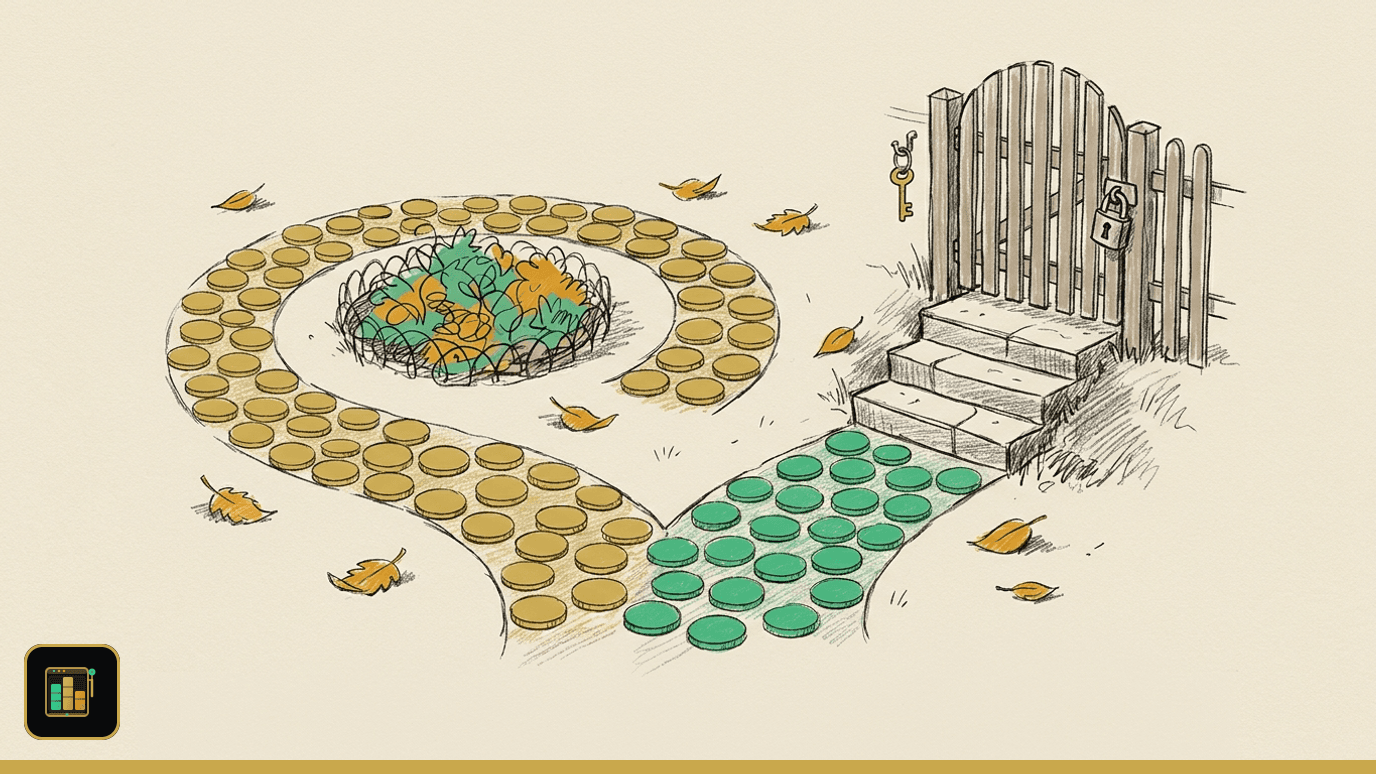
The coin in your balance is a promotional entry, not a paycheck. Read the rules before you read the number.
Common traps
- Treating SC as cash.McLuck's rules say SC has no real monetary value. High 5's say SC has no monetary value until redeemed. A balance is not money in the bank.
- Skipping playthrough. Both rulebooks say free SC must be played at least once before it counts toward a redemption. High 5 reserves the right to require more than once.
- Forgetting minimums. High 5 requires 50 eligible SC for a non-cash prize and 100 for a cash prize. Small balances can sit below the line for a long time.
- Letting coins expire.McLuck expires Sweeps Coins after 60 days without SC play, and Pulsz's terms set the same 60-day window.
- Botching the mail-in. McLuck asks for non-black ink and High 5 recommends black. Request codes expire too: 25 days at McLuck, 60 days at High 5. Small details void cards.
A balance is not a redemption
Say you collect 30 SC from free bonuses at a brand with a 1x playthrough and a 100 SC cash minimum.
You play the 30 SC through once and finish with 22 SC, now eligible. Your balance says 22. What you can redeem today is nothing, because 22 is below the 100 SC minimum.
Illustrative numbers. Playthrough rules and minimums vary by brand; check the brand's rules.
The 60-day clock
Say your last Sweeps Coins game at a brand with a 60-day dormancy rule was on March 1. If you do not play with SC again, the balance can expire around April 30. In the McLuck and Pulsz wording, the clock counts play with coins, not logins, so read how each brand defines activity.
Illustrative dates. Dormancy windows vary by brand; McLuck and Pulsz both use 60 days.
A checklist before you play
- Check that the brand accepts players in your state, and meet its age minimum. Both rulebooks we read set it at 21.
- Find the free entry methods: daily bonus, mail-in, and giveaways.
- Read the playthrough rule for free SC before you count it as eligible.
- Note the redemption minimums for cash and non-cash prizes.
- Find the dormancy rule and how long your coins last without play.
- Expect an identity check before any redemption.
- Set a budget and a time limit. If you buy Gold Coins, treat it as entertainment spend.
The Ledger Line
The two-coin model is not complicated once you see what each coin is for. Gold Coins are the game. Sweeps Coins are the sweepstakes, and the sweepstakes runs on its rules page. The brands worth your time publish clear free entry methods, plain playthrough terms, and minimums you can find in one click. We measure, you play. Play for fun, set limits before you start, and step away when it stops being fun.
Sources
- McLuck Sweepstakes Rules, version 1.9 (updated May 5, 2026), sections 2, 3 and 4
- High 5 Casino Sweepstakes Official Rules, version 44.0 (October 14, 2026), sections 2, 6, 7 and 8
- Pulsz Terms of Use, sections 2.1 and 6.11
- Wisconsin Department of Administration, Division of Gaming: Contests, Sweepstakes and Sales Promotions
Keep reading
The Weekly Scoreboard
The offers and rank moves that matter. Once a week.
21+ only. By subscribing you agree to our privacy policy.